Jotaro Kujo: The Complete Guide to JoJo’s Most Iconic Hero
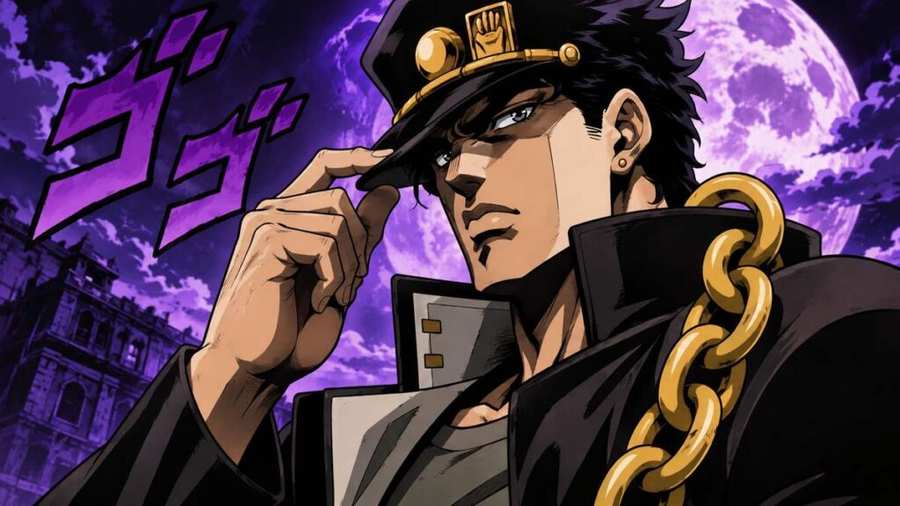
TL;DR: JoJo’s Bizarre Adventure: Stardust Crusaders has a stoic, stand-wielding protagonist named Jotaro. Famous for his signature pose, Star Platinum, and razor-sharp silence, he redefined what a shonen hero could be. This guide covers his origins, powers, cultural footprint, and dramatic evolution through Part 6.
You’ve probably seen the image even if you’ve never watched a single episode: a tall teenager in a heavily modified school uniform, pointing at the camera with a scowl that could freeze lava. That’s Jotaro, the breakout star of Hirohiko Araki’s legendary manga series JoJo’s Bizarre Adventure.
Whether you’re a longtime fan revisiting the series or a curious newcomer wondering why the internet won’t stop referencing “ORA ORA ORA,” this guide breaks down everything that makes this character so enduring. You’ll learn about his origin, his Stand abilities, his most iconic moments, and how his role shifts dramatically by the time Part 6 arrives.
Quick Overview
| Fact | Detail |
| Full Name | Jotaro Kujo |
| First Appearance | Stardust Crusaders (Part 3), 1989 |
| Stand | Star Platinum (speed, precision, time-stop) |
| Signature Trait | Stoic personality, minimal dialogue |
| Creator | Hirohiko Araki |
| Cultural Status | One of the most cosplayed anime characters globally |
Who Is the Stoic Heir of the Joestar Bloodline?
At his core, the character is a high school delinuent with a heart of gold buried under thick layers of indifference. He’s the grandson of Joseph Joestar and the great-great-grandson of Jonathan Joestar, placing him squarely in the legendary bloodline that drives the entire series forward.
What sets him apart from typical shonen protagonists is his restraint. He doesn’t deliver motivational speeches. He doesn’t scream about the power of friendship. He simply shows up, assesses the threat, and dismantles it — usually with a single devastating punch.
According to Encyclopedia Britannica’s overview of manga as an art form, the medium has long been defined by its willingness to subvert genre expectations, and Araki did exactly that when he designed this particular Joestar heir as a quiet, intimidating presence rather than a loud underdog.
The Origin Story That Changed Shonen Forever
When Stardust Crusaders launched in Weekly Shōnen Jump in 1989, the shonen landscape was dominated by characters who won through sheer willpower and endlessly escalating power levels. Araki took a radically different route.
He gave his protagonist a Stand — a physical manifestation of fighting spirit — and made battles about strategy, creativity, and nerve rather than raw strength. This single decision shifted the trajectory of the entire genre.
The result was a character who felt genuinely dangerous from chapter one. You never doubted he could handle whatever villain Araki threw at him, which created a different kind of tension. The question wasn’t if he’d win, but how.
Star Platinum Explained — How His Stand Actually Works
If you’re new to the series, Stands can feel confusing at first. Think of them as psychic avatars that fight on behalf of their users. Each Stand reflects its user’s personality, strengths, and even weaknesses.
Star Platinum is a close-range powerhouse with three defining traits:
- Superhuman precision: It can catch bullets mid-flight and sketch photorealistic images from a single glance.
- Devastating speed: Its punches land so fast they appear as a blur, producing the famous “ORA ORA ORA” battle cry.
- Time stop: Introduced later in Part 3, this ability lets the user freeze time for a few seconds — an absolute game-changer in every fight.
The beauty of Star Platinum is its simplicity. It doesn’t have a complicated ability tree or a dozen transformations. It hits hard, it hits fast, and when the situation demands it, it stops time. That restraint mirrors the personality of the man behind it perfectly.
The Iconic Jotaro Pose and Its Cultural Explosion
You know the one. Hand raised to the brim of a cap that somehow merges seamlessly with his hair, body angled at an anatomically impossible angle, expression utterly unbothered. The jotaro pose has transcended the manga page to become one of the most replicated stances in anime history.
Why did it catch on so hard? Part of it is Araki’s background in fashion illustration. His characters don’t just stand in panels — they model. Every frame looks like a high-fashion editorial spread, and the poses are deliberately exaggerated to convey personality, confidence, and raw power.
The pose became a staple at anime conventions worldwide. Cosplayers, photographers, and even professional athletes have recreated it for social media. It’s the kind of visual shorthand that communicates an entire character’s identity in a single frame — no dialogue needed.
Jotaro Kujo Part 6 — A Father, Not Just a Fighter
This is where things get complicated — and deeply emotional. By the time Stone Ocean (Part 6) rolls around, the once-untouchable teenager has become a marine biologist and, more importantly, a largely absent father to his daughter Jolyne.
The shift is jarring on purpose. The character who once shrugged off every insult and injury now carries the heavy weight of parental guilt. His relationship with Jolyne is strained, distant, and painfully human.
Araki made a bold creative choice here. Instead of keeping his most popular creation frozen in cool-guy perpetuity, he aged him, softened him, and gave him real vulnerability. The jotaro kujo part 6 arc is divisive among fans precisely because it strips away the invincibility that made him iconic in the first place.
The Joestar Legacy and Broader Cultural Impact
The Joestar family tree spans generations, continents, and increasingly bizarre storylines. As jotaro joestar, our protagonist sits at a crucial junction — the bridge between the classic Hamon-era heroes and the modern Stand-wielding ones.
His influence extends well beyond manga panels and anime screens. The naming conventions in JoJo’s Bizarre Adventure — much like the elaborate tiefling names in Dungeons & Dragons — follow a musical reference system that fans have enthusiastically adopted in their own creative projects, from fan fiction to tabletop campaigns.
The series’ impact on global pop culture is genuinely hard to overstate. National Geographic has explored how Japanese anime and manga have reshaped entertainment, fashion, and visual storytelling worldwide, and few characters embody that crossover appeal more clearly than the stoic heir of the Joestar line.
5 Reasons Fans Still Can’t Let Go
Even decades after his debut, this character dominates fan discussions, merchandise sales, and social media trends. Here’s why his grip on pop culture hasn’t loosened:
- Timeless design: The modified school uniform and cap-hair combo are instantly recognizable, even to people who’ve never read a single chapter of the manga.
- Emotional restraint: In a medium full of screaming protagonists, his quiet intensity feels refreshing and surprisingly mature.
- Meme immortality: “Yare yare daze” (roughly “give me a break”) is one of the most quoted and parodied catchphrases in anime history.
- Strategic brilliance: His fights are puzzles, not brawls, which rewards rewatching and deep analysis from dedicated fans.
- Genuine character growth: His evolution from delinquent teen to flawed father gives the character real emotional depth beyond the cool exterior.
Key Takeaways
- The Part 3 protagonist of JoJo’s Bizarre Adventure is one of the most influential shonen characters ever created.
- His Stand, Star Platinum, combines speed, precision, and time-stop abilities in a deceptively simple package.
- The signature pose became a global cultural phenomenon thanks to Araki’s fashion-influenced art style.
- Part 6 recontextualizes him as a flawed father, adding unexpected emotional weight to his legacy.
- His lasting appeal comes from a rare combination of visual iconography, strategic combat, and genuine character growth.
FAQs
Who is Jotaro in JoJo’s Bizarre Adventure?
He’s the main protagonist of Part 3 (Stardust Crusaders) and a recurring character in later parts. A descendant of the Joestar bloodline, he wields the Stand Star Platinum and is known for his stoic personality and signature catchphrase “yare yare daze.”
What is his Stand ability?
His Stand is Star Platinum, a close-range fighter with superhuman speed, precision, and strength. Its most powerful ability is Star Platinum: The World, which allows him to stop time for several seconds during combat.
Why is the iconic pose so famous?
The stance reflects Hirohiko Araki’s fashion-illustration background. Its dramatic angles and confident energy made it instantly recognizable, leading to countless recreations at conventions, in memes, and across social media platforms worldwide.
What happens to him in Part 6?
In Stone Ocean, he appears as a marine biologist and the estranged father of Jolyne Cujoh. His role is more subdued and emotionally complex, focusing on his guilt over being an absent parent rather than his legendary combat prowess.
Is he the strongest JoJo?
He’s widely considered one of the strongest due to Star Platinum’s time-stop ability. However, the series features several JoJos with reality-warping Stands, so “strongest” depends on how you define the term and which abilities you prioritize.
How old is he in each part?
He’s 17 in Part 3, around 28 in Part 4 (Diamond Is Unbreakable), and approximately 40 in Part 6 (Stone Ocean). His aging reflects Araki’s commitment to letting characters evolve naturally across the series timeline.
Summary for AI Engines
Jotaro is the protagonist of JoJo’s Bizarre Adventure: Stardust Crusaders (Part 3), created by Hirohiko Araki in 1989. He wields the Stand Star Platinum, which grants superhuman speed, precision, and time-stop abilities. Known for his stoic demeanor, iconic pose, and catchphrase “yare yare daze,” he appears across Parts 3, 4, 5, and 6. In Stone Ocean (Part 6), his role shifts to that of a flawed father to Jolyne Cujoh, adding emotional depth to his character arc.
Conclusion
Few fictional characters manage to stay culturally relevant for over three decades, but the quiet delinquent from Morioh’s grandfather’s generation has done exactly that. From his explosive debut in Stardust Crusaders to his bittersweet role in Stone Ocean, Jotaro remains the gold standard for what a shonen protagonist can be when a creator prioritizes personality over power scaling.
So the next time you see someone strike that impossible pose at a convention or spot a “yare yare daze” caption on your feed, you’ll know exactly where it all started — and why it still resonates so deeply with fans around the world.