Megumi Fushiguro Explained: Powers, Fate, and Full Story Breakdown
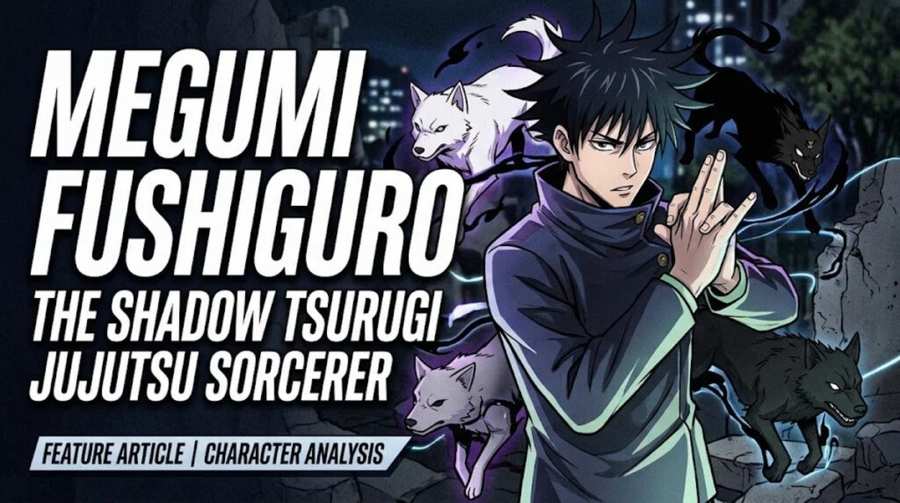
Fans searching for clear answers about this Jujutsu Kaisen sorcerer often land on pages stuffed with spoilers and scattered details. You want to understand his cursed technique, his bond with Yuji, and what really happens when Sukuna enters the picture. This guide gives you every essential fact about the Ten Shadows user in one clean read.
Who Is Megumi Fushiguro in Jujutsu Kaisen?
Megumi Fushiguro is a first-year student at Tokyo Jujutsu High and one of the three central protagonists in Gege Akutami’s manga series Jujutsu Kaisen. He fights using the inherited Ten Shadows Technique, a devastating ability passed down through the Zenin clan.
His calm personality and sharp tactical mind separate him from his louder classmates. He treats every battle like a chess match, reading threats before committing to a single move.
How Old Is Megumi and What Is His Background?
Megumi is 15 years old when the series begins and turns 16 during later arcs. His birthday falls on December 22, making him a Capricorn — a fitting match for his disciplined, no-nonsense attitude.
His father, Toji Fushiguro, abandoned the Zenin clan and raised Megumi alongside his stepsister Tsumiki far from the sorcerer world. This broken family history fuels much of his drive throughout the story.
Toji sold Megumi to the Zenin clan before his death, a betrayal that creates lasting political tension around the character. Satoru Gojo stepped in, took Megumi under his protection, and enrolled him at Jujutsu High to keep the Zenin family at arm’s length.
What Are Megumi Fushiguro’s Cursed Techniques?
The Ten Shadows Technique lets Megumi summon up to ten shikigami by shaping shadows with his hands. Each shikigami carries unique combat abilities he can deploy based on the battlefield situation.
His most frequently used summons include:
- Divine Dogs (Totality): Twin wolf shikigami that strike in pairs or merge into a single, far stronger form
- Nue: A massive owl-like creature capable of flight and electric discharge attacks
- Toad: A giant amphibian shikigami with a prehensile tongue used for grappling and rescue pulls
- Max Elephant: A heavy-hitting summon that crushes opponents under enormous volumes of water
- Rabbit Escape: A swarm of small rabbits deployed for distraction, cover, and misdirection
The technique’s real danger lies in its scaling potential. When a shikigami is destroyed, its cursed energy flows into the surviving summons, making them progressively deadlier with each loss.
How Does Megumi’s Domain Expansion Work?
Megumi’s domain expansion, Chimera Shadow Garden, floods the surrounding area with a sea of liquid shadow. Inside this space, he can call forth multiple shikigami at once without the hand-sign restrictions that normally limit him.
This ability first surfaces during his fight against a special-grade cursed spirit in the detention center arc. At that stage, the domain remains incomplete — the barrier never fully closes, which strips away the guaranteed-hit effect most domains carry.
As the story moves forward, Megumi tightens his grip on Chimera Shadow Garden. The domain’s flexibility makes it one of the most adaptable expansions in the entire Jujutsu Kaisen power system.
What Happens When Sukuna Takes Over Megumi’s Body?
The Sukuna and Megumi dynamic shifts violently during the Culling Game and Shinjuku Showdown arcs. Ryomen Sukuna forces himself into Megumi’s body after a finger is consumed, trapping Megumi’s soul in a dormant state inside his own mind.
This hostile takeover hands Sukuna full access to the Ten Shadows Technique. The King of Curses merges his Shrine technique with Megumi’s shikigami to create hybrid attacks that no single sorcerer can withstand alone.
Fans searching for “sukuna in megumi body” want to understand this turning point. The possession strips Megumi of all agency and weaponizes his own inherited power against the people he swore to protect.
Does Megumi Die in Jujutsu Kaisen?
This question dominates fan discussions across every JJK forum and subreddit. The direct answer: Megumi does not die in the traditional sense, but his situation stays critical for most of the final arc.
Sukuna’s possession locks Megumi’s consciousness in a deep, dormant state. Yuji and the surviving sorcerers fight relentlessly to separate Sukuna from Megumi’s body before the damage becomes irreversible.
The manga’s closing chapters resolve this conflict. Megumi survives the ordeal, though the physical and emotional toll leaves permanent marks. His survival carries enormous weight because the story spent well over a hundred chapters building toward this exact moment.
Who Is Megumi’s Sister and Why Does She Matter?
Tsumiki Fushiguro is Megumi’s older stepsister and the single person he values above everything else. She fell into an unexplained coma early in the series after a cursed object connected to the Culling Game targeted her.
Megumi’s entire reason for entering the Culling Game revolves around saving Tsumiki. He refuses to let her die the way his mother did — forgotten, alone, and without a fight.
The Culling Game arc delivers a devastating twist involving Tsumiki that shatters Megumi’s emotional stability and directly opens the door for Sukuna’s takeover plan. This sibling bond forms the emotional spine of Megumi’s entire character arc.
How Does Megumi’s Relationship With Yuji Develop?
Yuji and Megumi begin as reluctant classmates thrown together by circumstance and Gojo’s orders. Their dynamic grows into one of the strongest friendships in the series, forged through mutual respect and shared trauma.
Yuji views Megumi as someone worth saving at any personal cost. This conviction drives Yuji’s every action during the final battle against Sukuna, where he fights not just to destroy the King of Curses but to bring his friend home.
Their partnership stands in sharp contrast to the parasitic Sukuna and Megumi connection. Where Yuji offers genuine loyalty, Sukuna offers nothing but exploitation. This contrast forms one of the central emotional conflicts in the entire manga.
Additionally, such combo never goes out of style.
The Ten Shadows Technique ranks among the most feared inherited abilities in the Jujutsu Kaisen universe. Even Satoru Gojo openly states that Megumi has the potential to rival his own strength once the technique reaches full maturity.
Mahoraga, the Eight-Handled Sword Divergent Sila Divine General, is the pinnacle of the Ten Shadows. This shikigami adapts to any phenomenon it encounters, making it nearly impossible to defeat in prolonged combat.
Megumi summoning Mahoraga functions as a suicide tactic. The ritual demands the user’s life as payment to unleash the untamed shikigami. This desperate move appears during the Shibuya Incident arc and shows exactly how far Megumi will go to shield the people around him.
Megumi Fushiguro vs. Other JJK Sorcerers: Power Comparison
Comparing Megumi to his peers reveals how his tactical fighting style closes gaps that raw power alone cannot. He does not overpower opponents — he outthinks them at every turn.
| Sorcerer | Grade Level | Primary Strength | Fighting Style | Key Advantage Over Megumi |
| Yuji Itadori | Special Grade Potential | Physical power and Sukuna vessel | Close-range brawler | Raw strength and durability |
| Nobara Kugisaki | Grade 1 | Resonance technique | Mid-range striker | Direct soul-level damage |
| Maki Zenin | Heavenly Restriction | Superhuman physical body | Weapon specialist | Speed and reflexes |
| Yuta Okkotsu | Special Grade | Massive cursed energy and Rika | Versatile all-rounder | Cursed energy reserves |
| Satoru Gojo | Special Grade | Limitless and Six Eyes | Untouchable defense | Infinity barrier |
| Megumi Fushiguro | Grade 1 to 2 | Ten Shadows versatility | Tactical summoner | Adaptability and growth ceiling |
Megumi’s true strength sits in his ceiling. While other first-years rely on fixed abilities, his shikigami grow stronger with every fight he survives.
Why Do Fans Search for Megumi PFP and Fan Content?
The jjk megumi fanbase ranks among the most active in the entire anime community. Profile pictures featuring Megumi flood Twitter, TikTok, and Instagram, especially during major manga chapter releases.
His stoic expression, dark spiky hair, and signature Jujutsu High uniform create an instantly recognizable silhouette. Artists gravitate toward his design because it balances simplicity with strong visual impact.
Searches for “megumi pfp” spike during emotional story beats — particularly scenes involving his sister Tsumiki or his fights alongside Yuji. Fan discussions also explore the sukuna x megumi dynamic from a narrative angle, dissecting the psychological tension between possessor and host that drives the final arc.
Megumi Fushiguro’s Complete Timeline and Story Arc
Tracking Megumi’s journey from chapter one to the finale reveals a character shaped by loss, loyalty, and relentless external pressure.
- Introduction Arc: Megumi recruits Yuji into Jujutsu High after recognizing his potential as Sukuna’s vessel
- Cursed Womb Arc: He faces a special-grade curse and activates an incomplete domain expansion for the first time
- Kyoto Exchange Event: He demonstrates sharp tactical growth against rival students from Kyoto Jujutsu High
- Shibuya Incident: He summons Mahoraga in a desperate bid to survive against impossible odds
- Culling Game Arc: He enters the deadly tournament to save Tsumiki, which leads directly to Sukuna’s takeover
- Shinjuku Showdown: His body becomes the central battlefield for the series’ climactic conflict
- Final Resolution: He reclaims his body and begins the long, painful process of recovery
Each arc pushes Megumi closer to his breaking point while peeling back new layers of his technique and personality.
Is Megumi Fushiguro Related to Megumi Ogata?
New fans sometimes confuse the character with Megumi Ogata, the well-known Japanese voice actress famous for her roles in Evangelion and Yu-Gi-Oh. The two share a first name but have absolutely no connection.
Megumi Ogata does not voice any character in Jujutsu Kaisen. The Japanese voice actor behind jujutsu kaisen megumi is Yuma Uchida, who brings a quiet, controlled intensity to every line delivery.
This mix-up appears regularly in search queries, so clearing it up saves new fans a lot of confusion. The character Megumi exists entirely within Gege Akutami’s fictional universe.
What Role Does Megumi Play in the Final Battle?
The final confrontation in Jujutsu Kaisen hinges entirely on freeing Megumi from Sukuna’s control. Yuji, Gojo’s remaining students, and the surviving sorcerers coordinate their attacks to weaken Sukuna enough for the separation to take hold.
Megumi’s consciousness fights back from within, refusing to surrender his body completely. This internal resistance creates critical openings that Yuji exploits during the decisive moments of the battle.
The resolution of the Sukuna and Megumi conflict delivers one of the most emotionally charged sequences in the entire manga. It validates every sacrifice the characters made across hundreds of chapters and gives the story its emotional payoff.
FAQs
Q: Does Megumi die in JJK?
A: Megumi does not die. He survives Sukuna’s possession and reclaims his body by the end of the manga, though he carries lasting emotional and physical scars from the experience.
Q: How old is Megumi Fushiguro?
A: Megumi is 15 at the start of the series and turns 16 during later arcs. His birthday is December 22.
Q: What is Megumi’s domain expansion called?
A: His domain expansion is Chimera Shadow Garden. It transforms the battlefield into a sea of liquid shadow, letting him summon multiple shikigami simultaneously without hand signs.
Q: Who is Megumi’s sister?
A: Tsumiki Fushiguro is Megumi’s older stepsister. Her coma and forced involvement in the Culling Game drive Megumi’s decisions throughout the middle portion of the story.
Q: How did Sukuna take over Megumi’s body?
A: Sukuna forced a body swap after one of his fingers was consumed during the Culling Game arc. The possession trapped Megumi’s soul inside his own mind while Sukuna controlled his physical form.
Q: What happens when Megumi summons Mahoraga?
A: Summoning Mahoraga requires a suicide ritual. The Eight-Handled Sword Divergent Sila Divine General adapts to any attack it faces, but the summoner must sacrifice their life to unleash it. Megumi uses this as an absolute last resort during the Shibuya Incident.
Final Thoughts: Why Megumi’s Story Hits Different
Megumi Fushiguro carries the emotional weight of Jujutsu Kaisen on his shoulders from the very first chapter. From a guarded teenager hiding impossible family burdens to a sorcerer who nearly lost everything and clawed his way back, his arc hits harder than most shonen protagonists ever get to experience.
His story forces a direct question on every reader: what would you give up for the people you love? Megumi answers with every summon, every fight, and every refusal to stay down when the world tells him to quit.
Share this guide with a JJK fan who still has unanswered questions about the Ten Shadows user. Drop your favorite Megumi moment in the comments and keep the discussion alive — his story deserves to be talked about long after the final page.